TL;DR
Blocked drains in Rayleigh are usually caused by a build-up of fat and wipes, tree roots finding their way into ageing pipe joints, or a structural fault such as a displaced joint that a blockage keeps returning to. Whether the drain is yours to clear or Anglian Water's responsibility depends on exactly where along the run the fault sits. If you're dealing with a slow-draining sink, gurgling pipes, or a smell that won't shift, request a fast, fixed-price quote online and we'll clear it and confirm the cause.
Signs Your Drain Is Blocked
Most blockages give you some warning before they turn into a full backup:
- Water draining away slowly from a sink, bath, or shower
- Gurgling sounds from a toilet or plughole after water is used elsewhere in the house
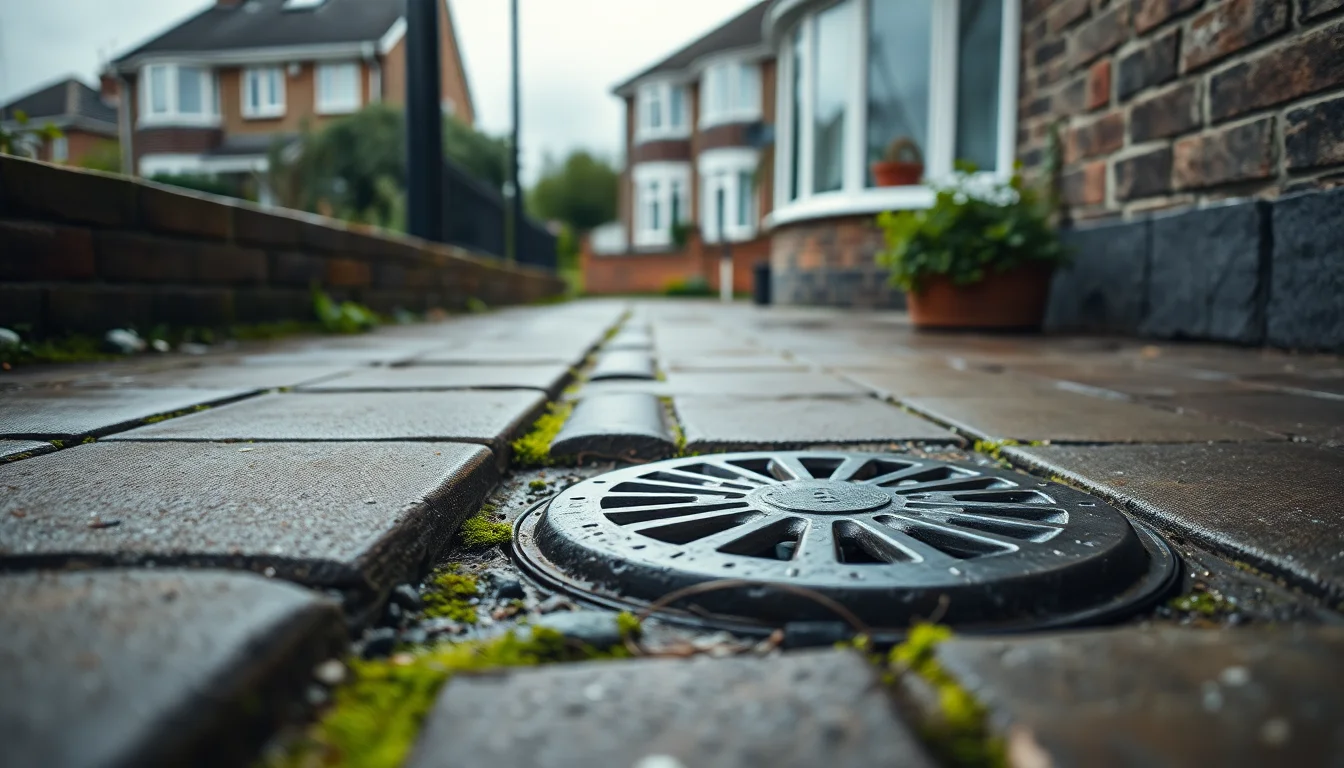
- A persistent smell near a gully, manhole, or drain outside
- Water pooling around an external gully after rain
- A toilet that needs flushing more than once to clear
Catching these early usually means a straightforward clear rather than an emergency callout later on.
What Makes Rayleigh Different
Rayleigh sits on high ground — the ridge that the Norman castle earthwork at Rayleigh Mount and the old tower windmill beside it were built on is one of the more prominent hills in south Essex. The land falls away from the town centre in more than one direction: north towards the Crouch valley and Hullbridge, and away to the south-east towards the A127 at Rayleigh Weir. That slope shapes how drainage behaves here. Steeply graded runs tend to keep themselves reasonably clear, but where a run flattens out lower down the hill, that is where fat, silt and debris settle, and where a shared drain will show the first signs of backing up.
The town's housing is just as mixed. Rayleigh has an old market-town core, a large amount of growth that followed the railway reaching the town in the late 1880s, heavy interwar expansion, and then post-war and later estates spreading out towards Rawreth, Hockley and Hullbridge. That means jointed clay pipework of real age in the older streets, mid-century materials in the post-war estates, and modern plastic in the newest developments — three different failure patterns, sometimes within a few hundred metres of each other.
One thing worth knowing: Rayleigh is in the Rochford district, not the Basildon borough, so planning and building control sit with Rochford District Council. Sewerage, however, is Anglian Water's across the whole area, which is what matters when a blockage turns out to be beyond your boundary.
What's Actually Causing the Blockage
The cause is often specific to the type of property and how the drain is used:
- Fat, oil, and food waste poured down kitchen sinks cools and solidifies inside the pipe, gradually narrowing it until nothing can pass. This is the single most common cause in domestic kitchens.
- Wipes and sanitary products flushed down the toilet don't break down the way toilet paper does, and they lodge easily in older, narrower original pipework.
- Tree roots exploit any small crack or open joint in search of moisture, gradually filling the pipe. Rayleigh's older streets and long-established gardens give roots decades to find a way in.
- Structural faults — a displaced joint, a partial collapse, or a section of pipe that's settled unevenly — can create a low point where debris collects repeatedly, even after clearing. If a blockage keeps coming back in the same place, this is usually why.
Who's Responsible: You or Anglian Water?
This is one of the most common questions we're asked on site. Anglian Water is the sewerage undertaker for Rayleigh and the wider Essex area, and under the private sewer transfer that took effect on 1 October 2011, ownership of most shared drains and lateral drains — the section of pipe running from your property boundary out to the public sewer — passed to the water company automatically.
In practice, that generally means:
- Drainage inside your property boundary serving only your property remains your responsibility
- A drain shared with a neighbouring property, or the lateral connection out to the public sewer, is usually Anglian Water's
Because pre-2011 deeds and modern sewer maps don't always agree with what's actually in the ground — particularly on older streets where informal connections were made over the years — the only way to know for certain where the boundary sits on your property is to have the drain surveyed and mapped.
How Blocked Drains Are Actually Cleared
Most domestic blockages are cleared using one of two methods, sometimes together:
- Drain rodding physically breaks up and pushes through a blockage using flexible rods fed down the pipe. It's effective for straightforward obstructions close to an access point.
- High-pressure jetting uses a controlled jet of water to blast through fat, scale, and root growth, and to flush the debris clear along the full length of the pipe rather than just punching a hole through it. It's generally more thorough for stubborn or recurring blockages.
Once the blockage is cleared, a CCTV camera can confirm the pipe is genuinely clear along its full length, rather than just clear at the point the rod or jet reached — which matters if the blockage has come back before.
Our blocked drains team covers blocked drain clearance across Rayleigh, using both rodding and jetting depending on what the blockage actually needs, with drain unblocking available for toilets, sinks, baths, and external runs alike.
Preventing Recurrence
A handful of habits make a real difference to how often a Rayleigh property needs a drain cleared:
- Scrape food waste and fat into the bin rather than the sink, even in small amounts
- Use a sink strainer to catch food debris before it reaches the pipe
- Bin wipes and sanitary products rather than flushing them, whatever the packaging claims
- Have a CCTV survey if a blockage keeps returning, so you're dealing with the actual cause rather than repeating the same temporary fix
FAQ
What causes blocked drains in Rayleigh?
Fat and food waste, flushed wipes, tree root ingress into ageing pipe joints, and structural faults such as displaced joints are the most common causes we see on callouts.
Who's responsible for a blocked drain — me or Anglian Water?
Drainage inside your property boundary serving only your property is generally yours. Shared drains and the lateral connection out to the public sewer usually transferred to Anglian Water under the 2011 private sewer transfer rules, though the exact boundary depends on your property.
Get Your Drain Cleared Properly
If a blockage in your Rayleigh property keeps coming back, or you're just not sure whether it's your responsibility or Anglian Water's, request a fast, fixed-price quote online and we'll clear it and tell you honestly what we find. See our full drainage coverage across Rayleigh for the other services we offer in the area.